English
 Italiano
 Français
 Deutsch
 Español


- -10%
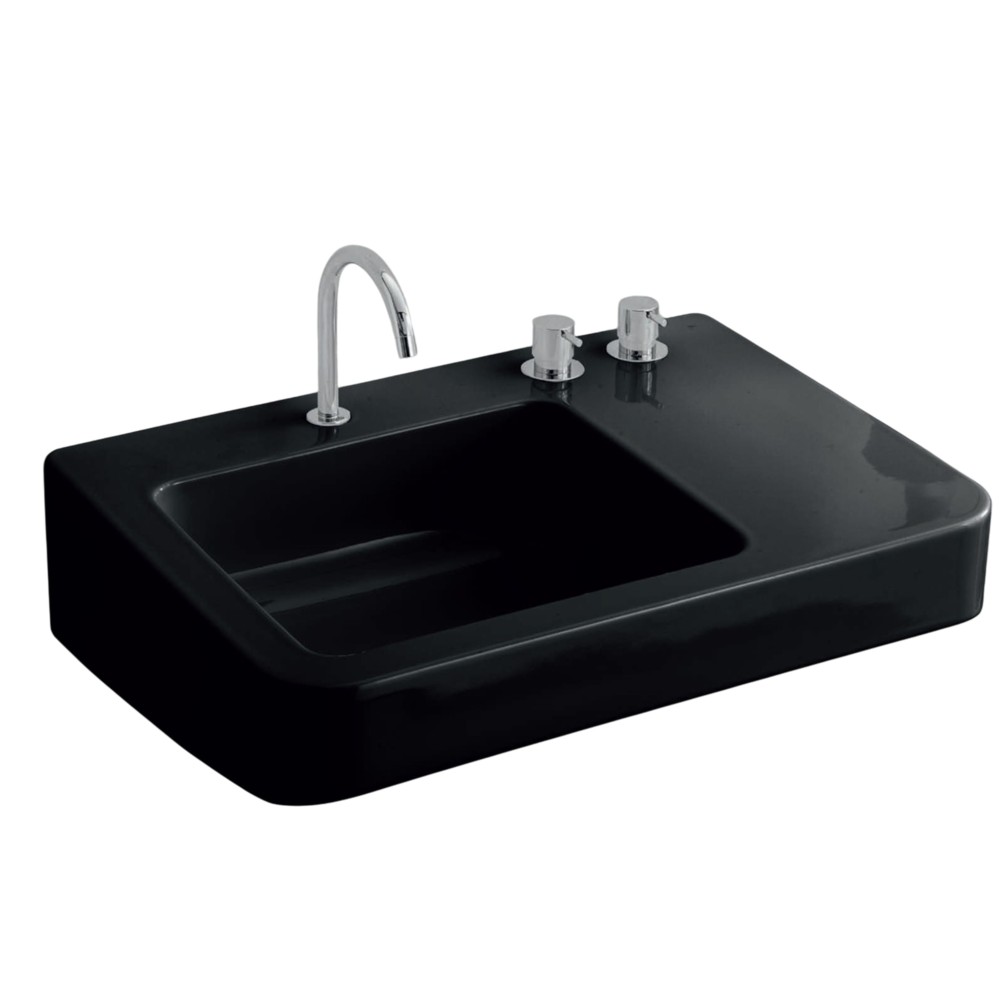
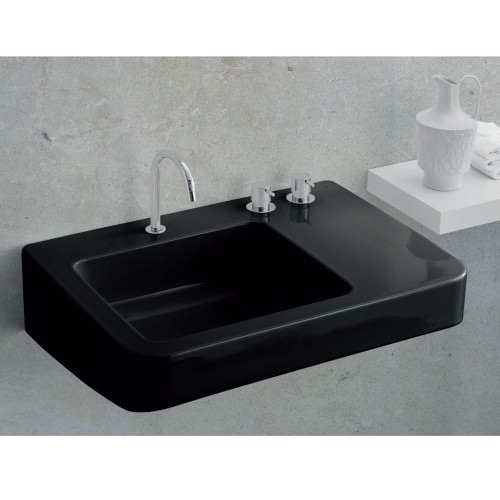
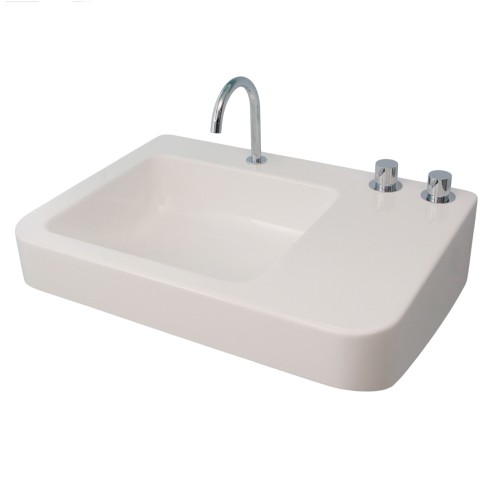
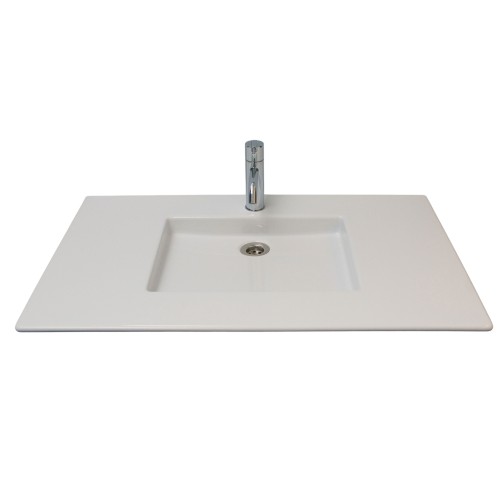
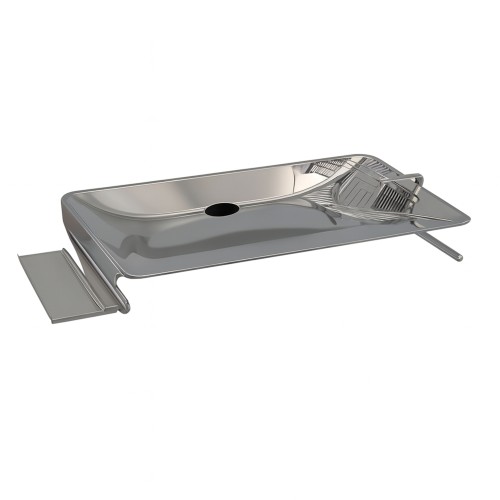
White ceramic sink, without overflow, with three tap holes and a spout. Complete with siphon and drain.
Designed by Gio Ponti in 1933

White ceramic sink, without overflow, with three tap holes and a spout. Complete with siphon and drain.
Designed by Gio Ponti in 1933










 Secure and verified payments
Paypal, credit card, bank transfer
Guaranteed Products
Buy new products, with original packaging and covered by warranty.
Our experts
We offer you maximum availability by phone and by email.
After-sales assistance
We are always at your disposal, even after the purchase.
A dive into the history of Italian design with Montecatini, the wall-mounted washbasin designed by Gio Ponti in 1933.
Essential geometric lines and a rectangular silhouette define this white or black ceramic washbasin, a true masterpiece of style that has survived decades without ever losing its relevance.
The washbasin is equipped with a side drain and has 3 holes for installing a deck-mounted dual-control mixer.
The wall-mounted installation makes Montecatini the ideal solution for furnishing stylish bathrooms with a touch of timeless design.
More than a simple washbasin, Montecatini is a work of art that enhances your bathroom, giving it a timeless and sophisticated charm.
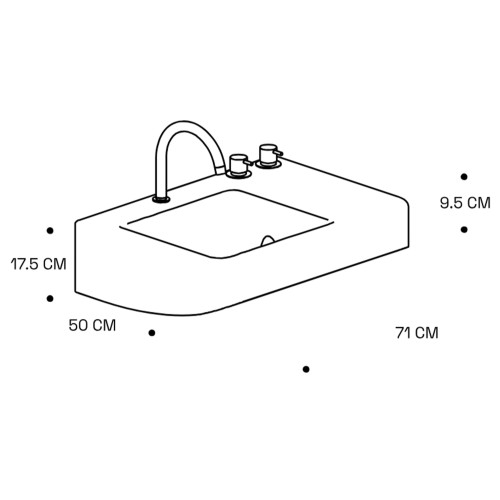
DIMENSION:
71 x 50 x h. 17.5 cm (minimum height 9.5 cm)
Gio Ponti
Giovanni Ponti, known as Gio, was one of the most important figures in the twentieth-century art scene. Architect, industrial designer, artist, and publisher, he is considered one of the fathers of modern architecture in Italy. Having graduated in 1921, Gio Ponti received his first job in 1923 at Richard-Ginori, as artistic director. In 1927, he partnered with Emilio Lancia and founded the Ponti-Lancia studio, while the following year he founded the magazine Domus. His career was now well underway, branching out into various artistic fields. During these years, he designed high-end furniture and several objects for mass production, produced and sold by La Rinascente under the Domus Nova brand. In 1931, he began collaborating with the Luigi Fontana company, later renamed FontanaArte, of which he became artistic director. In the early 1930s, he designed the Bilia table lamp, the 0024 lamp collection, and the 1932 steel and glass coffee table, all of which are still in the company's catalog today. He also continued his career as an architect, and in 1936, he was appointed professor of "Interiors, Furnishings, and Decoration" at the Milan Polytechnic, a position he held until 1961.
Immediately after the war, he began collaborating with the Venetian company Venini, designing the spectacular blown-glass lamps in the collection that bears his name, still in the catalog today. In 1948, he created the legendary La Cornuta coffee machine for La Pavoni, and in 1954, he was among the architects of the Compasso d'Oro award. One of his most fruitful periods begins, especially with regards to product design, while in the field of architecture he completes the project for one of Milan's iconic buildings, the Pirelli skyscraper (1956).
Data sheet